Shopping for a Falmouth waterfront home and hearing the term “jumbo loan”? You are not alone. Many Foreside and shoreline properties are priced so that financing crosses into non-conforming territory, which changes how lenders review your file and how sellers view your offer. In this guide, you will learn what makes a loan jumbo, what lenders typically require, the coastal factors that can affect approval and insurance, and the steps to present a finance-ready offer that stands out. Let’s dive in.
What makes a loan jumbo
A jumbo loan is any mortgage amount above the conforming loan limit set each year by the Federal Housing Finance Agency. Conforming loans can be purchased by Fannie Mae or Freddie Mac, while jumbo loans are kept in a lender’s portfolio or sold to specialty investors. Because limits vary by county and year, you should check the current FHFA county limit for Cumberland County before labeling a loan jumbo.
Some counties also allow “high-balance” conforming loans above the national baseline. Whether that applies changes by year, so confirm local limits before you shop. If your required loan amount exceeds the applicable conforming or high-balance cap, you are in jumbo territory.
Why jumbos matter in Falmouth
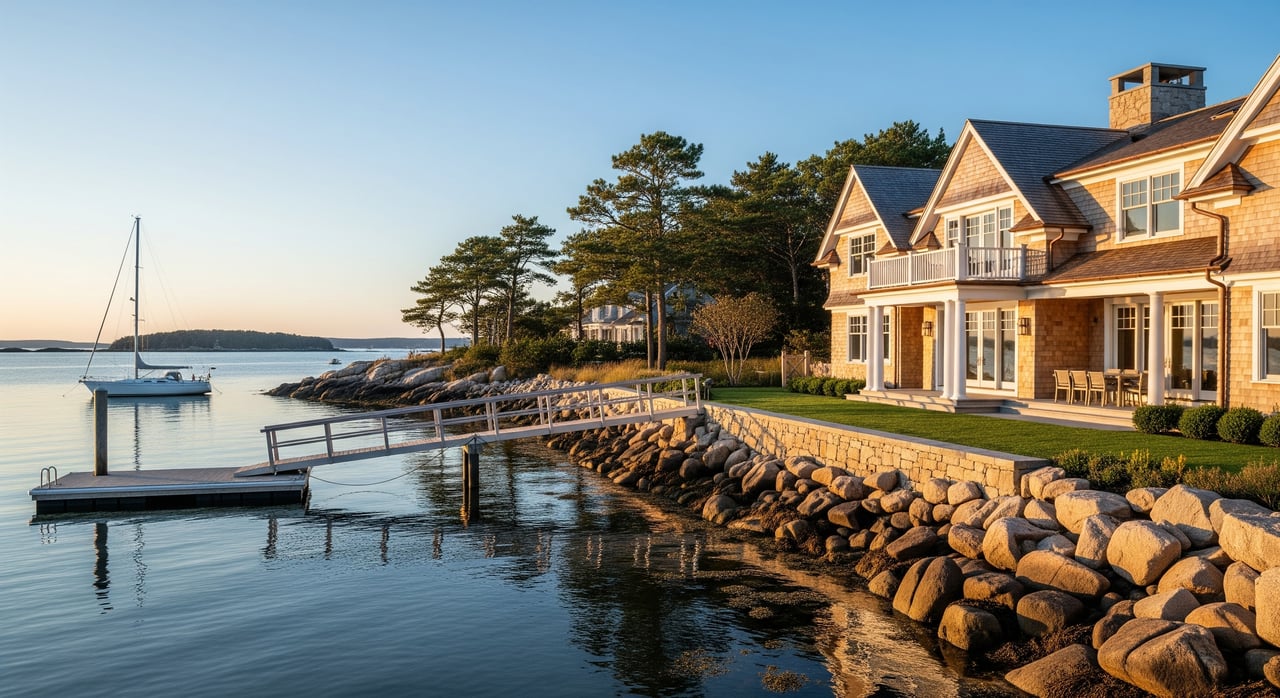
Falmouth and the Foreside offer limited waterfront inventory and higher price points compared to the broader market. That means many buyers will consider loan sizes near or above local conforming limits. Jumbo underwriting is usually more conservative, with closer scrutiny of credit, income, assets, and the property itself. In a multiple-offer situation, showing a strong, fully vetted financing package can make the difference.
What lenders look for
Credit and debt-to-income
Most jumbo lenders prefer a FICO score of at least 700. Some portfolio lenders may consider lower scores if you have strong compensating factors. Many aim for a debt-to-income ratio below about 43 to 45 percent, though stronger assets and credit can offset a higher ratio in certain cases.
Down payment and reserves
A 20 percent down payment is a common threshold for mainstream jumbo pricing. For second homes or higher perceived property risk, some lenders prefer 25 percent or more. You should also plan for reserves after closing. Many lenders want to see 6 to 12 months of total housing payments in liquid assets for primary homes, and 12 or more months for second homes or investment properties.
Income and documentation
Expect full documentation. Salaried buyers typically provide recent pay stubs, two years of W‑2s, and bank statements. Self‑employed buyers usually provide two years of personal and business tax returns, plus statements that verify assets. Large deposits need to be sourced with a paper trail or a clear letter of explanation. Retirement accounts can count toward assets, and some lenders use asset‑depletion calculations to convert them into qualifying income.
Appraisal and property value
Waterfront appraisals often require an appraiser with coastal experience. Lenders may order a second valuation review. Features like docks, bulkheads, tidal influence, and water rights can affect value and insurability. Expect added scrutiny and build appraisal time into your plan.
Coastal essentials for Falmouth buyers
Flood zones and insurance
Your lender will order a flood zone determination using FEMA maps. If the property is in a Special Flood Hazard Area, flood insurance is generally required. Coastal exposure can increase premiums, so it is smart to request a flood insurance estimate early. Elevation, flood zone type, and proximity to mapped floodways or V zones influence cost and availability.
Wind coverage and mitigation
Insurers assess wind and storm exposure on the coast. They may look for impact‑resistant glass, storm shutters, roof age, and other mitigation features. Insurance availability and cost can affect both closing and long‑term ownership, so get quotes early and plan for inspections that address condition.
Title, access, and water rights
Waterfront properties can include shared docks, deeded water access, and easements. In Maine, tidal and intertidal rights can raise special title questions. A clear survey and a title review focused on easements, riparian rights, and tidal claims are important. Work with a local title company and, when appropriate, a Maine real estate attorney.
Septic, wells, and utilities
Some coastal lots rely on private septic systems, wells, or deeded access lanes. Lenders may require septic inspections and verification of utilities. Appraisers will consider utility setups when evaluating value and marketability.
Permitting and setbacks
Shoreland zoning and local setback rules can limit expansion or reconstruction. Underwriters consider rebuild feasibility and permitted use. Gather permits and prior approvals early so you can answer lender and appraiser questions quickly.
Choose the right lender
Different lender types serve jumbo borrowers:
- Local banks and credit unions: Often hold loans in portfolio and understand Maine coastal nuances.
- National mortgage banks: Competitive pricing, but sometimes stricter standardized rules.
- Private banks and portfolio lenders: Good for buyers with significant assets who want flexible structures.
- Non‑QM and specialty programs: Options for complex income, usually with higher rates or fees.
A smart approach is to get at least two quotes. Consider one from a local bank or credit union and one from a national or portfolio lender. Compare rates, fees, required reserves, and underwriting speed. Prioritize lenders who regularly finance Maine waterfront properties and use appraisers with coastal experience.
Get pre‑underwritten, not just pre‑approved
A pre‑approval is useful, but for jumbo loans, a pre‑underwritten or fully underwritten conditional approval is stronger. An underwriter reviews your full file and issues conditions that are mostly property‑specific, such as appraisal and title. This gives sellers more confidence in your financing.
Steps to get pre‑underwritten
- Choose a lender experienced with Maine coastal jumbos.
- Provide full documentation up front: two years of tax returns, recent pay stubs, W‑2s or 1099s, 2 to 6 months of bank and brokerage statements, and verification for large assets or gifts.
- Complete the application and authorize verification of employment and assets.
- The underwriter issues a conditional approval with standard conditions.
- Lock your rate once conditions are set and the appraisal is ordered, and confirm lock rules and extension costs.
Timeline and rate locks
Pre‑underwriting often takes 7 to 21 days depending on complexity. Appraisal and title can add time, especially for waterfront. Plan for about 3 to 6 weeks to reach a firm commitment. Because jumbo lock policies vary, confirm expiration dates and any float‑down options before you lock.
Make a finance‑ready offer
- Include a pre‑underwritten conditional approval and current proof of assets.
- Offer strong earnest money and set realistic but efficient contingency timelines.
- If you have significant cash or a private banking relationship, include proof of funds or a letter that outlines closing capacity and timing.
- Consider a higher down payment and ample reserves to strengthen your position.
- Coordinate appraisal and inspections early to keep the process moving.
Buyer checklists
Documentation to prepare
- Two years of tax returns with all schedules, plus W‑2s and 1099s
- 30 to 60 days of recent pay stubs
- 2 to 12 months of bank, brokerage, and retirement statements
- Evidence of down payment and reserves, including sale proceeds if applicable
- Letters explaining large deposits, gaps, or credit inquiries
- Photo ID and social security number
Coastal property items to order early
- Flood determination and preliminary flood insurance estimate
- Appraiser with waterfront experience
- Survey or certificate of location
- Septic inspection if applicable
- Dock or pier inspection if applicable
- Title review for easements, riparian rights, and tidal issues
Risks and tradeoffs
- Timing: Jumbo underwriting and specialized appraisals can extend timelines. Start early.
- Pricing: Some jumbo programs carry higher fees or different pricing structures.
- Insurance and climate: Flood, wind, and coastal erosion risks affect insurability and future resale. Get long‑term quotes and consider mitigation.
- Contingencies: Waiving financing is risky unless you have a binding commitment or ample cash reserves. Balance speed with protection.
- Local counsel: Consider a Maine attorney and an experienced local title company for waterfront titles and tidal issues.
Buying on the Falmouth coast is a lifestyle decision and a financial one. With the right lender, full documentation, and early coastal due diligence, you can compete with confidence for the home you want. If you are ready to build a finance‑forward plan for a Foreside or shoreline purchase, reach out to the local team at KW Lifestyle Properties. We will coordinate your search, connect you with trusted lenders and inspectors, and help you present a compelling, finance‑ready offer.
FAQs
What is a jumbo loan in Cumberland County, Maine?
- A jumbo loan is any mortgage above the FHFA conforming or high‑balance limit for the county in a given year; check the current FHFA limit to know where jumbo begins.
How much down payment do I need for a waterfront jumbo?
- Many lenders price best at 20 percent down, while second homes or higher risk properties may see requests for 25 percent or more.
Do all Falmouth waterfront homes require flood insurance?
- Not all, but if the property maps into a Special Flood Hazard Area, most lenders require flood insurance and premiums can be higher near the coast.
How many months of reserves do jumbo lenders want?
- Plan for 6 to 12 months of total housing payments for a primary home, and 12 or more months for a second home or investment property.
How long does jumbo pre‑underwriting take before I can offer?
- Pre‑underwriting can take 7 to 21 days, with 3 to 6 weeks common to reach a firm commitment once appraisal and title are complete.
Can assets help me qualify if income is complex?
- Yes, many jumbo programs allow asset‑depletion calculations or consider substantial reserves as a compensating factor, subject to lender guidelines.