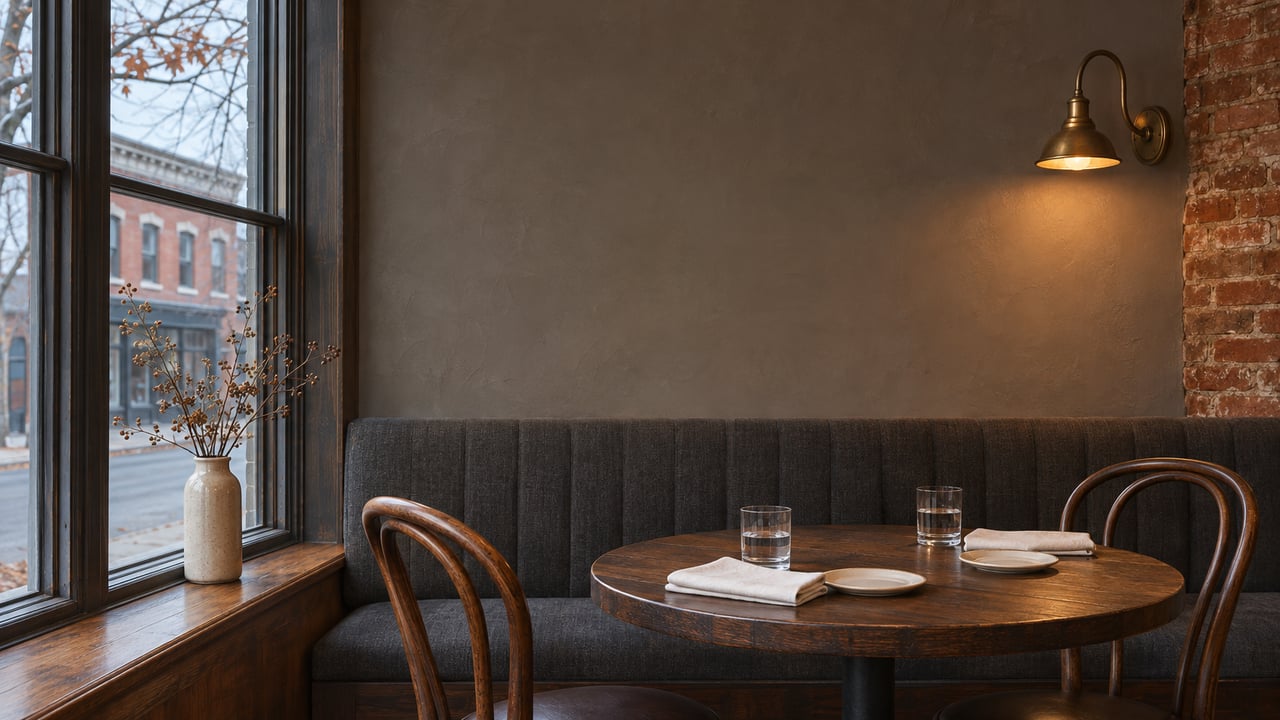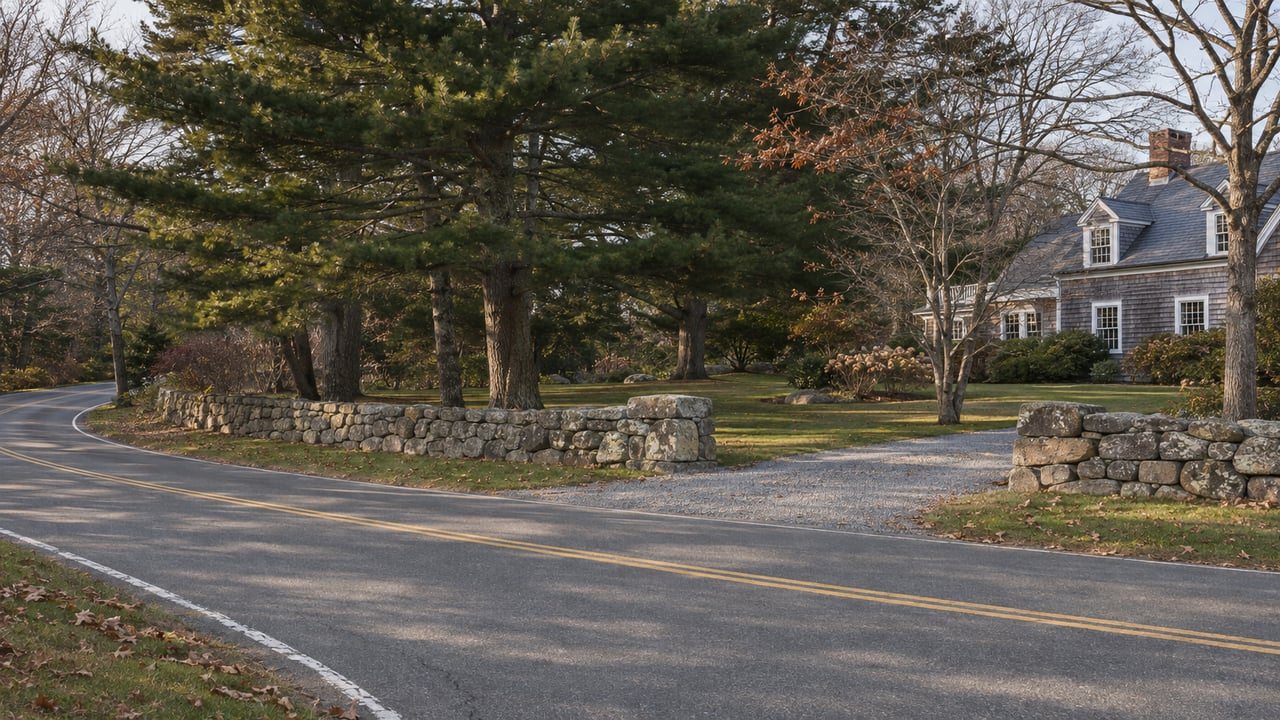
At the edge of Congress Square, there is now a 4,200-square-foot timber pavilion with a mural by Portland artist Jenna Pirello. Its frame is mostly Maine wood, milled and fabricated by WholeTrees at its facility in Ashland. It has public seating, free Wi-Fi and an open invitation to stay a while. It was also designed from the start to be taken apart.
Down on the eastern waterfront, on the asphalt where cars once lined up for the Nova Scotia ferry, the city has been building a waterfront park with a stage, shade trees and room for food trucks. It is the first phase of a park that is meant to grow to nearly twice its size.
Downtown got two new free public spaces this fall, and neither is in its final form. One is a stand-in for a museum wing that hasn't been built yet. The other is a first installment on a waterfront plan that still needs funding. For anyone who lives on the peninsula, that makes this November an unusual window. You can use both places now, while they are still being tested.
A Pavilion Made to Come Down
PMA | AMP opened on Friday, October 2, 2026. The Portland Museum of Art put it on the site of its planned expansion, ahead of permanent construction. It was designed by LEVER Architecture, the firm also designing the museum's future 60,000-square-foot expansion. In the museum's announcement, the PMA says the structure is meant to be "fully deconstructed, relocated, and repurposed" once construction on the permanent wing begins.
The museum is open about why it built a temporary pavilion. The same release calls the space a chance to "pilot ideas that will ultimately shape the future reimagining of the museum." Thomas Robinson, LEVER's founding principal, said that opening the site during the design process creates "an opportunity for public participation that will directly inform and shape the future expansion." So the people who drop in this fall are effectively test users for a building that hasn't been drawn in its final form.
Here is what the pavilion offers right now:
- An "Outdoor Office" with free Wi-Fi and public seating, set up for everyday use.
- Rotating programs that include installations, performances, workshops and PMA Films screenings.
- Local partners on programming, including Creative Portland, Mayo Street Arts, WMPG Radio, the State Theatre, Flat Iron Coffee, Friends of Congress Square Park, the Maine Outdoor Film Festival and Classical Uprising.
- No admission fee. Opening day set the tone with free drop-in printmaking, coffee and a DJ from 10 a.m. to 8 p.m.
AMP keeps regular museum hours from May through November: Tuesday through Sunday from 10 a.m. to 6 p.m., with Friday open until 8 p.m. After that it is "closed seasonally." The museum has also been closed on Mondays since October 19. That leaves the rest of November for the pavilion's first season. The museum posts program updates and any hour changes on portlandmuseum.org, and Friday evenings are the longest stretch it is open each week.
A Park Built on a Ferry Queue
The waterfront project tests a bigger idea. The first phase of First Light Commons covers 3.5 acres of the former ferry queuing lot near the Ocean Gateway terminal on northern Commercial Street. Once the ferry stopped running, that land was used as temporary parking. According to Mainebiz, phase one includes:
- A central green space with walking and biking trails and benches
- 40 shade trees and other native plantings
- An informal stage for performances
- Dedicated spaces for food trucks and arts vendors
- Close to 125 parking spaces
This phase cost $2.5 million. The Portland Parks Conservancy raised $400,000 in private donations, and a federal appropriation secured by U.S. Sen. Angus King covered most of the rest. The idea goes back to the late Richard "Dick" Barringer, a longtime Maine conservation leader. He and his team first proposed the park in 2020, and the city and the Conservancy carried it forward.
At the April groundbreaking, parks director Ethan Hipple described the park's purpose in terms of where it sits. "At a time when this area is seeing rapid changes and development, this space will preserve the public's access to the waterfront for generations to come," he said in the city's announcement.
The opening date has moved around. In April, the city said the park would open by the end of 2026. In September, Mainebiz reported it was on track for October. WGME described it on September 16 as nearly finished. The city's project page is the place to check whether the gates are open before you walk over.
The Name Came Before the Art
The name arrived well before the park was finished. Residents submitted more than 325 suggestions in a February survey, and a naming committee chaired by Councilor Sarah Michniewicz met four times between March and May. The City Council approved "First Light Commons" 9–0 on June 15, 2026, as the Portland Press Herald had previewed. The council order says the name honors the historical and cultural significance of the Wabanaki and African American communities in the area.
The art that goes with the name is scheduled for later. Hipple told Mainebiz that several public art pieces, including some donated by artist David Evans Shaw, will be installed in time for a grand opening celebration planned for spring 2027. The centerpiece will be a bronze statue of a Native American fisherman by Maine Wabanaki artist Gabriel Frey. Hipple said the work honors the fact that "this was the first place on the Portland peninsula settled by indigenous people, before the Europeans came."
That means anyone walking the trails this winter is seeing the park before its centerpiece arrives and before its official celebration.
The Second Phase Has No Budget Yet
The full plan is much larger than what is going in now. Once complete, First Light Commons is meant to extend to the north side of Ocean Gateway and take in two smaller spots, for nearly six acres in all.
- Amethyst Park, near SailMaine's teaching center, was built in 2020 as a temporary pop-up. Hipple told Mainebiz, "we didn't have a lot of resources, but it's very popular and busy."
- Moontide Park sits where an old pier once stood. Many of the rotting pilings are still there, and most of the parcel is underwater except at low tide. It will need significant seawall restoration and fill.
Plans for that section call for a promenade, more seating, better pedestrian and bike trails, and fishing areas. "There are stripers here," Hipple told Mainebiz. The budget isn't set but could approach $15 million, roughly six times the cost of phase one. The city, the Parks Conservancy and the Trust for Public Land are looking for money to design and build the later phases. The longer-term idea is a waterfront park running from Maine State Pier to the Portland Foreside development.
Amethyst Park began as a low-budget pop-up, drew steady use, and is now part of a bigger plan. AMP works the same way at the museum, where the PMA is testing programs in the pavilion while LEVER designs the permanent wing.
The Blocks Around the Pavilion Are Changing Too
The streets around AMP are seeing turnover this fall, mostly in small spaces:
- Bad Neighbors opened at the corner of Congress and Brown Streets in late August, according to Portland Food Map.
- Chez Biso, at 11 Brown St. in the former Tokyo Sushi Ramen space, was set to open October 17, the Portland Press Herald reported. The Portland Old Port food report describes a menu of traditional Congolese dishes alongside familiar Maine favorites.
- Oat Mode, a cafe of about 30 seats serving customizable oatmeal and yogurt bowls and smoothies, was aiming for a November opening at 25 Pearl St., the former Subway, per Portland Food Map.
- Veranda Kitchen & Bar is preparing an Old Port location at 425 Fore St., Suite 103, with patio seating. The Portland Old Port site expects it later this fall.
- Botanically Curious, the apothecary at 419 Congress St. in the Masonic Building, has announced that Sunday, November 22, will be its last day.
Two of those dates line up with the pavilion's. If you want to see Botanically Curious one more time, the last weeks of AMP's first season fall in the same stretch.
At KW Lifestyle Properties, we follow how downtown spaces like the PMA's future wing and the Ocean Gateway waterfront take shape. Those changes affect daily life in the Arts District and East End long before they show up in a market report. If you're thinking about what these projects mean for your own place downtown, book an appointment with our team and we'll walk you through what's planned and when.