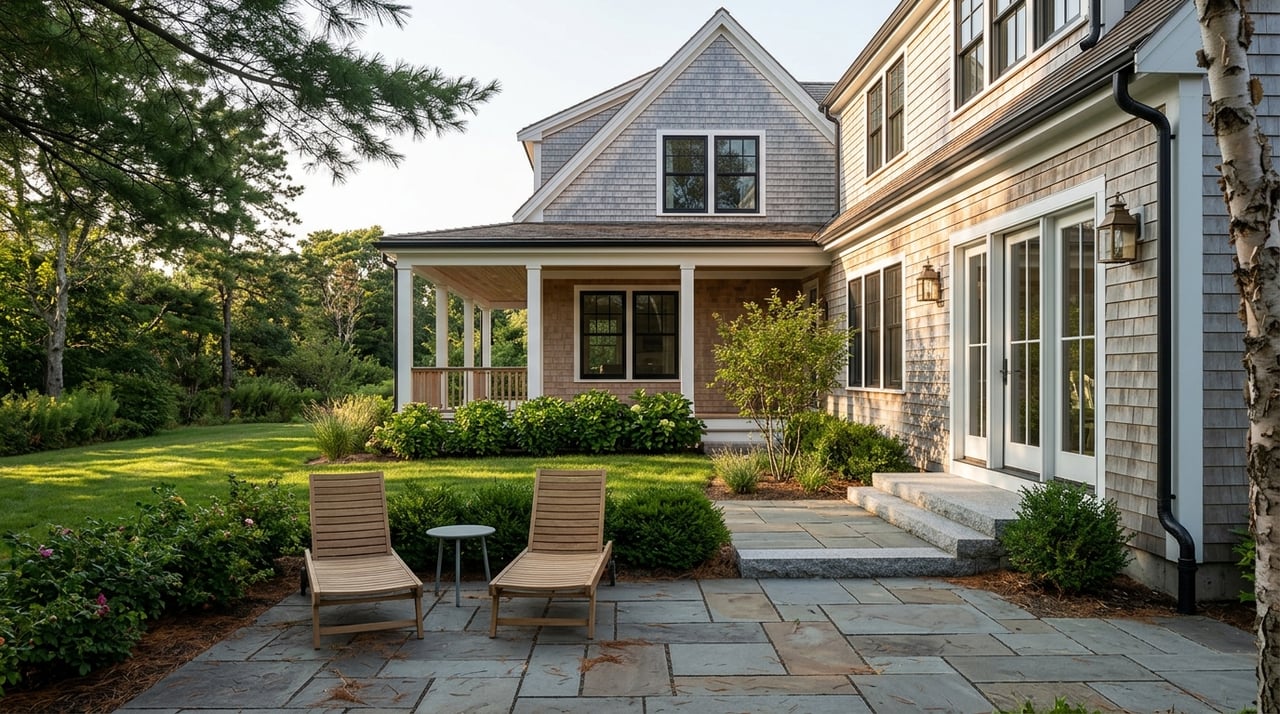
Wondering what it really means to buy a home in Falmouth? In one town, you can find waterfront settings, classic suburban neighborhoods, and homes near golf, marina, and club amenities, but each comes with different tradeoffs. If you are trying to decide which version of Falmouth fits your budget and lifestyle, this guide will help you compare the market, daily life, and key due diligence points before you make a move. Let’s dive in.
Why Falmouth draws buyers
Falmouth sits just north of Portland and stretches from the coastline into more rural inland areas. That mix gives you options that feel very different from one another, even within the same town. Instead of shopping one uniform market, you are often choosing between coastal, suburban, and amenity-driven living.
For many buyers, that flexibility is the appeal. You can prioritize water access, a more traditional neighborhood setting, or proximity to club and marina amenities while still staying connected to the Portland region. Falmouth also offers access to major travel corridors like I-295, I-95, Route 1, and Route 100, which helps explain its popularity with local movers and relocators alike.
Falmouth housing market at a glance
Falmouth is a high-cost market by any measure. As of spring 2026, Zillow's home value index was $897,432, Redfin's March 2026 median sale price was $950,000, and Realtor.com reported a February 2026 median listing price of $1,149,500. Those numbers track different things, but together they point to a market where many buyers need to be prepared for a high-$800,000s to $1 million-plus price range.
The town's own long-term data shows just how much values have changed. Falmouth's comprehensive plan reports that the median home price rose from $384,500 in 2013 to $925,000 in 2023. That sharp increase helps explain why buyers often need to be very focused about location, features, and long-term costs.
Housing stock is also fairly concentrated in one main type. The town reports that 81% of housing units are detached single-family homes, while fewer than 10% are in buildings with three or more units. In other words, if you are hoping for a wide range of lower-maintenance or lower-cost options, the current housing mix in Falmouth can feel limited.
What home styles are common in Falmouth
Most buyers in Falmouth will be looking at detached single-family homes. The town says 54% of new units completed from 2014 through 2023 were detached single-family homes, reinforcing how strongly the market still leans in that direction. About 22% of homes were built after 2000, while 13.7% were built before 1940, so inventory can range from older homes with character to newer construction in more recently developed areas.
That matters because your day-to-day experience may depend as much on the setting as the house itself. A coastal property may come with different maintenance and permitting questions. A newer inland home may offer a more familiar suburban layout, while homes near clubs or marinas may appeal more for convenience and lifestyle than for square footage alone.
Coastal living in Falmouth Foreside
If your vision of Maine includes salt air, boats, and shoreline views, Falmouth's coastal areas will likely stand out first. The town's coastline is about 20 miles long and is almost exclusively residential, with a small number of notable waterfront uses such as Town Landing, Portland Yacht Club, Portland Country Club, Handy Boat Marina, and Gilsland Farm. This part of town offers some of Falmouth's most distinctive housing and lifestyle appeal.
Town Landing is a major recreational asset. The town highlights boating, sea kayaking, swimming, fishing, beachcombing, trailer and hand-carry launches, and a public beach there. For buyers who want regular water access without leaving town, that can be a meaningful part of the decision.
That said, coastal living in Falmouth is not just about views. The town's shoreland zoning applies to land within 250 feet of saltwater and certain other waterbodies, and work such as clearing, filling, road work, or other land disturbance may require a shoreland permit and possibly Planning Board approval. If you are considering a waterfront or near-water purchase, due diligence should include a close review of permitting, site constraints, access, and long-term upkeep.
Climate resilience is another important consideration. The town's comprehensive plan notes that multiple storms have damaged Town Landing and identifies climate resilience as a major waterfront priority. For you as a buyer, that means a coastal purchase may require a more detailed look at storm exposure, site history, and future maintenance expectations.
Suburban inland living in Falmouth
If you want a more conventional neighborhood feel, inland Falmouth may be the better fit. The town describes much of the area outside its main growth corridors as low- and medium-density residential, along with agricultural, forestry, and open-space uses. In practical terms, this often means standard detached homes, subdivisions, and neighborhood streets that may feel more familiar to buyers moving from other suburban parts of Greater Portland.
The town directs most future growth toward Route 1, Route 100, and parts of Route 88. That makes those corridors important if you want easier access to shopping, services, and commuting routes. Since Falmouth does not have a traditional downtown or village core, many daily routines are shaped more by corridor convenience than by a walk-to-center lifestyle.
This setup can be a good match if your priorities are simple and practical. You may care more about your drive to Portland, access to errands, or how close you are to major roads than about being near the water. For many buyers, that tradeoff brings a more straightforward ownership experience.
Club and marina lifestyle options
Falmouth also offers a version of living shaped by nearby amenities. Portland Country Club in Falmouth Foreside promotes golf, swimming, tennis, pickleball, paddle or platform tennis, and year-round dining and social activities. Falmouth Country Club also offers private-club golf, tennis, pool, fitness, and dining, while Handy Boat Service has served Falmouth since 1934 as a full-service marina and anchorage.
If you are drawn to this type of setting, it helps to think beyond the home itself. In these areas, proximity to a marina or club can influence both value and daily enjoyment. The right fit often comes down to whether those amenities align with how you actually want to spend your time.
For some buyers, this creates a strong lifestyle match. If golf, boating, social dining, or easy access to recreation is high on your list, club- or marina-adjacent living can be compelling. If not, you may find better value by focusing on the home and location rather than the nearby amenities.
Commute and daily life in Falmouth
Falmouth works well for buyers who want access to Portland without living in the city. The town reports that most residents commute less than 10 miles, and 84.7% commute in under 25 minutes. It also estimates that about 5,400 employees commute into Falmouth while about 4,500 residents commute out, which reinforces its role as part of the broader Portland-area economy.
Daily life is shaped by the road network and commercial corridors. Planning materials note that the town's commercial centers are along Route 1 and Route 100 rather than in a central downtown. If you are relocating, one of the smartest questions to ask is not "Which village should I live in?" but "Which corridor best fits my commute and errands?"
Outdoor recreation adds year-round appeal
One of Falmouth's clearest strengths is outdoor access. The town's public facilities include Falmouth Community Park, a 160-acre property with nearly four miles of trails, and Blackstrap Hill Community Forest and Preserve, a nearly 520-acre preserve with more than nine miles of trails. Mackworth Island offers a 1.5-mile loop with wooded trails and sandy or rocky beaches, and Huston School Park includes an ice-skating pond.
Gilsland Farm also adds to the town's outdoor appeal. Maine Audubon says it is free and open to the public year-round, with trails for walking, snowshoeing, and cross-country skiing. For many buyers, Falmouth's lifestyle value comes not only from the coastline but also from its access to conserved land, trails, and winter recreation.
Costs to factor into your budget
In a market like Falmouth, purchase price is only part of the picture. The town's FY 2025-2026 property tax rate is $13.85 per $1,000 of assessed value, and Falmouth says real estate is assessed at 100% of market value. Based on that rate, annual property tax on a home valued at $897,432 is roughly $12,400, while tax on a $925,000 home is about $12,800 before any exemptions or abatements.
You will also want to be realistic about competition and supply. Zillow showed 31 homes for sale and 12 new listings as of April 30, 2026, pointing to relatively limited available inventory. With prices and supply both tight, preparation matters.
A smart due diligence checklist
Different parts of Falmouth call for different questions. Before you buy, it helps to match your due diligence to the property type and setting rather than using the same checklist for every home.
For coastal homes
- Review whether the property falls within shoreland zoning.
- Ask about permitting history for clearing, fill, driveway work, or other site changes.
- Evaluate storm exposure, shoreline conditions, and long-term maintenance needs.
- Confirm parking, water access, and how you plan to use the site.
For inland suburban homes
- Compare commute convenience to Portland and other routine destinations.
- Look closely at access to Route 1, Route 100, or Route 88 depending on your schedule.
- Consider whether the lot, layout, and neighborhood style match your long-term needs.
- Weigh convenience to services, trails, and recreation.
For club- or marina-adjacent homes
- Decide whether the nearby amenity is central to your lifestyle or just a nice extra.
- Consider how much value you place on golf, marina access, dining, or social activities.
- Compare the premium for location against the home's features and condition.
- Make sure the overall setting supports how you plan to use the property year-round.
What second-home buyers should know
If you are buying in Falmouth as a seasonal or second-home owner, do not assume short-term rental income will be simple or automatic. The town says no one may advertise, operate, or rent a short-term rental without first registering it with the town. The ordinance defines a short-term rental as lodging for fewer than 30 consecutive days, and the current annual registration fee is $300.
That rule may affect how you think about a coastal or club-area purchase. If rental income is part of your plan, it is worth confirming local requirements early so your numbers reflect reality. This is especially important when you are comparing homes that seem similar on paper but may function differently based on location or intended use.
How to choose the right version of Falmouth
The best way to buy in Falmouth is to start with your real priorities. If water access and coastal character matter most, focus on the shoreline and be ready for more complex due diligence. If commute ease and a familiar neighborhood setting matter more, inland areas may give you a better fit.
If you are drawn to golf, marina access, or club amenities, think honestly about how much those features will shape your life after closing. In Falmouth, the right home is not only about beds, baths, or square footage. It is about choosing the setting that fits how you want to live.
If you are planning a move in Falmouth or comparing coastal, suburban, and second-home options across Greater Portland, the team at KW Lifestyle Properties can help you narrow the market, understand the tradeoffs, and move forward with confidence.
FAQs
What is the typical home price range in Falmouth, Maine?
- Recent 2026 data places Falmouth in a high-$800,000s to $1 million-plus market, depending on whether you are looking at estimated values, closed sales, or listing prices.
What type of homes are most common in Falmouth, Maine?
- Falmouth's housing stock is dominated by detached single-family homes, which make up 81% of housing units according to the town's comprehensive plan.
What should buyers know about waterfront homes in Falmouth, Maine?
- Buyers should review shoreland zoning, possible permitting requirements, storm exposure, access, and ongoing maintenance considerations before purchasing a coastal property.
What is daily life like for homeowners in Falmouth, Maine?
- Falmouth offers access to Portland-area commuting routes, with most residents commuting under 25 minutes, and daily errands are often centered around the Route 1 and Route 100 corridors.
Can you use a second home in Falmouth, Maine as a short-term rental?
- Falmouth requires short-term rentals to be registered with the town, and the ordinance applies to lodging for fewer than 30 consecutive days.