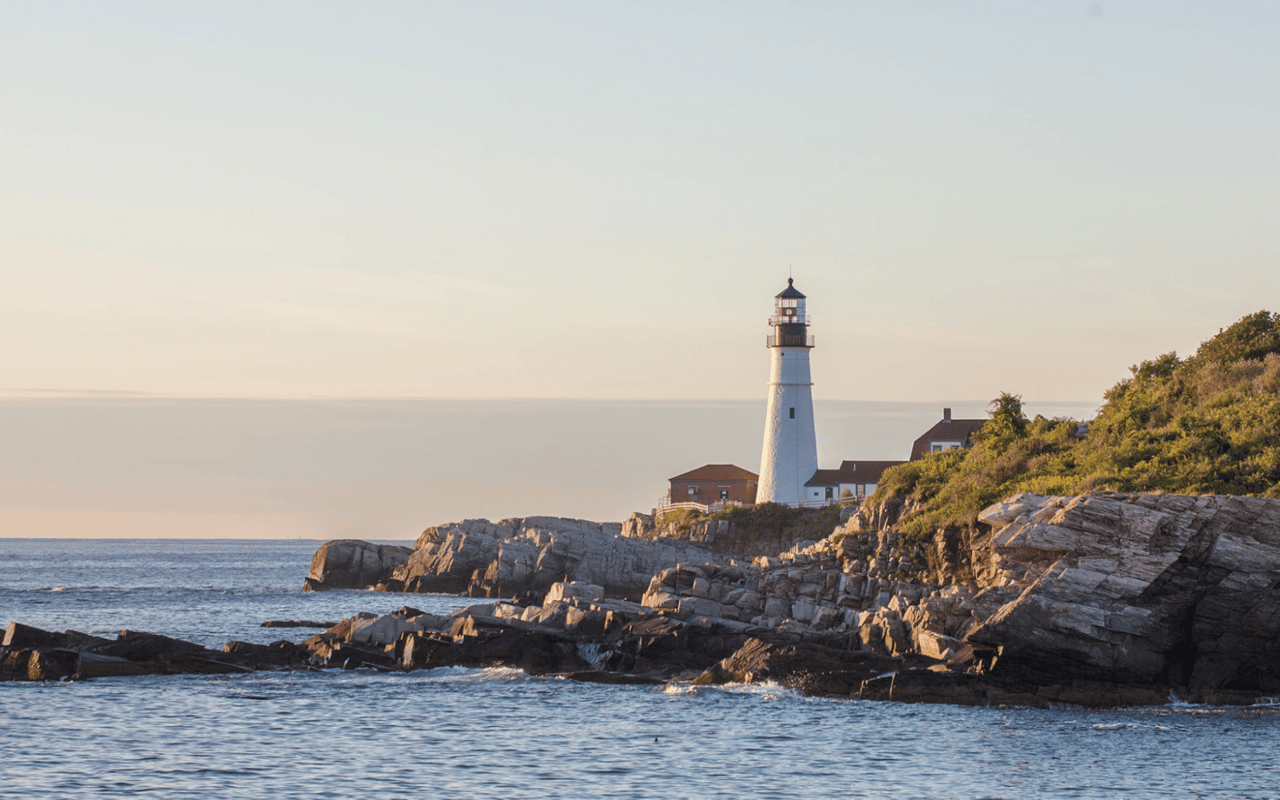
7 Architectural Landmarks in Portland, Maine: Historic Buildings & Sites
The 7 key architectural landmarks in Portland, Maine are the Portland Head Light, Victoria Mansion, Wadsworth-Longfellow House, U.S. Custom House, State Theatre, Cathedral of the Immaculate Conception, and the Portland Observatory. Built between 1785 and 1929, these historic structures feature Georgian, Italianate, Second Empire, Gothic Revival, and Art Deco designs.
Landmark Name | Year Completed | Architectural Style | Neighborhood / Location | Primary Significance |
|---|---|---|---|---|
Portland Head Light | 1791 | 18th-Century Lighthouse Architecture | Cape Elizabeth (8 mi South) | Maine's oldest lighthouse; commissioned by George Washington |
Wadsworth-Longfellow House | 1786 | Georgian Architecture | Congress St (Downtown Arts District) | Oldest standing structure on the Portland peninsula |
Portland Observatory | 1807 | Octagonal Wooden Signal Tower | Munjoy Hill (138 Congress St) | Last remaining maritime signal tower in the United States |
Victoria Mansion | 1860 | Italianate Villa Style | West End (109 Danforth St) | Premier example of pre-Civil War residential design |
Cathedral of Immaculate Conception | 1869 | Gothic Revival | East End / Bayside (307 Congress St) | Soaring 236-foot spire; mother church of the Diocese of Portland |
U.S. Custom House | 1872 | Second Empire Architecture | Commercial St (Waterfront) | Granite facade reflecting Portland's 19th-century maritime commerce |
State Theatre | 1929 | Art Deco Style | Congress Square (609 Congress St) | Historic live performance and concert venue |
Explore Historic Homes Near Portland Landmarks
Are you looking for a historic West End Victorian home or a modern condo near Congress Street?
Portland, Maine, is a city steeped in maritime history and architectural heritage. From 18th-century lighthouses along Casco Bay to elaborate Victorian villas in the West End, Portland's buildings tell the story of its evolution from a colonial trading port to a modern cultural hub.
1. Portland Head Light: 18th-Century Coastal Maritime Icon
No exploration of Portland's architectural landmarks is complete without visiting the Portland Head Light. Positioned at the entrance to Portland Harbor in Cape Elizabeth, this historic beacon is one of the oldest and most recognizable lighthouses in North America.
- Location: 1000 Shore Rd, Cape Elizabeth, ME 04107 (Fort Williams Park)
- Commission Date: Commissioned by George Washington; first lit in 1791
- Key Features: 80-foot white conical tower, historic keeper's house museum, coastal trails
The keeper's house operates as a public museum showcasing original maritime artifacts and lenses. Surrounding Fort Williams Park provides panoramic views of Casco Bay and the Atlantic Ocean.
2. Victoria Mansion: Italianate Residential Villa
Also known as the Morse-Libby House, Victoria Mansion is located in Portland's West End neighborhood. It represents one of the most intact pre-Civil War residential structures in the United States.
- Location: 109 Danforth St, Portland, ME 04101
- Architect & Date: Designed by Henry Austin; constructed between 1858 and 1860
- Architectural Features: Italianate style, brownstone exterior, original interior wall paintings and woodwork
Now operated as a non-profit museum, Victoria Mansion offers guided public tours highlighting 19th-century luxury, original furnishings, and historic restoration efforts.
3. Wadsworth-Longfellow House: 18th-Century Georgian Homestead
Located along Congress Street in the downtown Arts District, the Wadsworth-Longfellow House holds immense historical value as the childhood home of celebrated American poet Henry Wadsworth Longfellow.
- Location: 489 Congress St, Portland, ME 04101
- Construction Date: Built in 1785 to 1786 by General Peleg Wadsworth
- Architectural Style: Georgian brick architecture; oldest standing structure on the Portland peninsula
Operated by the Maine Historical Society, the museum complex includes guided interior tours and access to the adjacent Longfellow Garden, a landscaped garden retreat in downtown Portland.
4. The U.S. Custom House: Second Empire Granite Landmark
Overlooking Portland's active working harbor, the U.S. Custom House stands as a testament to the city's 19th-century maritime commerce and shipping prosperity.
- Location: 312 Fore St / Commercial St, Portland, ME 04101
- Architect & Date: Designed by Treasury Architect Ammi B. Young; completed in 1872
- Architectural Style: Second Empire style featuring a mansard roof, granite facade, and arched windows
Constructed following the Great Fire of 1866, the granite structure continues to house federal offices while preserving its ornate interior woodwork, marble floors, and decorative plaster ceilings.
5. State Theatre: 1920s Art Deco Performance Venue
Situated in Congress Square, the State Theatre is an anchor of Portland's Arts District, celebrated for its vintage interior design and live entertainment history.
- Location: 609 Congress St, Portland, ME 04101
- Architect & Date: Designed by Thomas W. Lamb; opened in 1929
- Architectural Style: Art Deco styling with Moorish interior accents and restored plasterwork
Following extensive historic restoration, the 1,870-seat theater functions as a premier live music and performance venue in Northern New England.
6. Cathedral of the Immaculate Conception: Gothic Revival Spire
Dominating the skyline of Portland's East End, the Cathedral of the Immaculate Conception serves as the cathedral church of the Roman Catholic Diocese of Portland.
- Location: 307 Congress St, Portland, ME 04101
- Architect & Date: Designed by Patrick Charles Keely; consecrated in 1869
- Architectural Style: Gothic Revival featuring a 236-foot main spire, stained glass windows, and pointed arches
The cathedral's soaring masonry spire remains the tallest man-made structure in the city of Portland, visible across Casco Bay and surrounding island waters.
7. The Portland Observatory: Historic Maritime Signal Tower
Perched atop Munjoy Hill, the Portland Observatory is the last remaining wooden maritime signal tower in the United States, designated as a National Historic Landmark.
- Location: 138 Congress St, Portland, ME 04101 (Munjoy Hill)
- Construction Date: Built in 1807 by Captain Lemuel Moody
- Architectural Features: 86-foot octagonal wooden tower with lantern deck and flag signaling system
Guided tours led by Greater Portland Landmarks allow visitors to climb the 102 steps to the top lantern deck for 360-degree views of Portland Harbor, Casco Bay, and the White Mountains.
Living Among Portland's Historic Neighborhoods
Portland's historic architectural landmarks are integrated into everyday residential neighborhoods. From Victorian townhomes in the West End to historic brick condos in the Old Port and Munjoy Hill, living in Portland allows residents to experience rich architectural character firsthand.
If you are exploring homes for sale in Portland or neighboring coastal towns like Falmouth and Scarborough, working with a local real estate professional ensures expert guidance on historic property maintenance, municipal zoning ordinances, and local property valuations.
Related Reading & Area Guides
- 9 Best Places to Shop in Portland, Maine
- 9 Best Day Trips from Portland, Maine
- Falmouth Real Estate & Neighborhood Guide
- Meet the Keller Williams Lifestyle Properties Team
Written by Keller Williams Lifestyle Properties
Brokerage: Keller Williams Realty | Licensed in Maine
Keller Williams Lifestyle Properties specializes in residential real estate across Portland, Cumberland County, and coastal Maine. Our local team provides expert guidance on historic homes, neighborhood market trends, and municipal property values.
Contact our team today to learn more about living in historic Portland, Maine.
Frequently Asked Questions
What is the oldest standing structure in Portland, Maine?
The Wadsworth-Longfellow House, constructed between 1785 and 1786 at 489 Congress Street, is the oldest standing building on the Portland peninsula.
What architectural style is Victoria Mansion in Portland, ME?
Victoria Mansion (the Morse-Libby House) is designed in the Italianate villa style, created by architect Henry Austin between 1858 and 1860.
Can you go to the top of the Portland Observatory?
Yes, the Portland Observatory on Munjoy Hill offers guided public tours through Greater Portland Landmarks, allowing visitors to climb to the top lantern deck for views of Portland Harbor.
Source: Historical construction dates and architectural classifications verified via National Register of Historic Places listings and Greater Portland Landmarks documentation.